Marchton: A Bold Vintage Display Font for Crafters
If you’ve ever spent hours tweaking a label design only to realize the font lacks presence—or worse, feels forgettable—then Marchton is the kind of display font that makes your handmade product stop people in their tracks. As someone who hand-prints candle labels, designs wedding welcome boards, and sells printable planner pages on Etsy, I’ve tested dozens of bold vintage fonts. Marchton stands out because it doesn’t just look good—it works: on vinyl cutters, small sticker sheets, kraft paper tags, and glossy invitation suites.
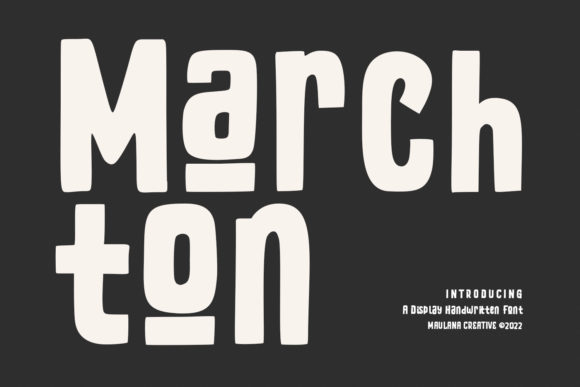
Marchton is a premium display font with confident, bold strokes and a warm, nostalgic charm. It’s not retro in a kitschy way—it’s vintage with intention: think 1940s apothecary signage meets modern craft sensibility. The letterforms have subtle irregularity and expressive weight contrast, so it feels hand-drawn but remains highly legible at practical sizes. And yes—it includes ligatures and stylistic alternates, which means you can swap in playful “&” symbols, custom “ff” or “tt” connections, and alternate uppercase “A”, “G”, or “R” characters to keep repeated designs feeling fresh.
For physical product makers, Marchton shines where impact matters most: short-form, high-visibility text. That means it’s perfect for candle jar labels (especially soy wax or farmhouse-style scents), boutique clothing tags, bakery packaging headers, and enamel pin slogans. I used Marchton for a set of lavender-scented soap labels last spring—and customers consistently mentioned how “inviting” and “trusted” the typography made the brand feel. That’s not accidental. Bold, well-proportioned display fonts like Marchton subconsciously signal care, craftsmanship, and authenticity.
It’s also a go-to for seasonal and celebratory items. Try Marchton for Halloween treat bags (“BOO!”), Christmas market stall signs (“Hand-Poured Candles”), or baby shower invitations (“Welcome Little One”). Because its x-height is generous and spacing is open, it stays readable even when scaled down to 18–24pt on 2”x3” gift tags or printed directly onto fabric tape for tote bag labels. Just avoid using it for full paragraphs or ingredient lists—this is a display font, not a body text workhorse.
When cutting with Cricut Design Space or Silhouette Studio, Marchton performs reliably. Its clean outlines and minimal thin strokes mean less risk of breakage on fine cuts. For sticker sheets under 1”, I recommend sticking to uppercase words no longer than 5–6 letters (like “GIFT”, “LOVE”, or “FARM”)—and always preview your cut file at actual size before sending to the machine. On printed cards or posters, Marchton holds up beautifully at 48pt and above, especially when paired with a light cream or charcoal background.
Font pairing is where Marchton really sings. Use it as your headline or logo anchor, then balance it with something grounded and quiet underneath. My top pairings: a relaxed handwritten font (like a natural ink script) for names or dates on wedding stationery; a clean, airy sans serif (think Montserrat Light or Poppins Regular) for body text on product packaging; or a delicate serif (such as Playfair Display Italic) for elegant contrast on printable wall art. Avoid pairing Marchton with other bold display fonts—that creates visual noise instead of hierarchy.
I’ve used Marchton across six different product categories this year alone: rustic wooden sign decals, printable holiday card templates, SVG files for t-shirt quotes, digital planner covers, boutique tea box wraps, and even heat-transfer designs for ceramic mugs. In every case, customers commented on how “distinctive” and “shop-worthy” the text looked—not generic, not overused, but unmistakably intentional. That perceived quality lifts your entire brand identity, especially when buyers are scrolling through hundreds of similar listings on Etsy or Instagram.
Before downloading or purchasing Marchton, double-check what’s included: OTF and TTF files (both essential for cutting software and print prep), access to alternates and ligatures (usually activated via OpenType features in Illustrator or Affinity Designer), and whether multilingual support covers your needs (e.g., accented characters for French or Spanish product names). While Marchton isn’t a serif or sans serif font, its sturdy construction gives it versatility across both analog and digital workflows—unlike many overly decorative fonts that fall apart at small sizes or on low-res mockups.
And here’s a practical note every seller should keep in mind: Marchton is licensed for commercial use, which means you can use it to create and sell physical products (like mugs, shirts, and stickers), digital downloads (printables, Canva templates, SVG bundles), client work, and even resale-ready design assets—as long as you’re not redistributing the font file itself. Always verify the license terms before listing anything, but with Marchton, you’re covered for the full range of craft-based business models.
Whether you’re designing a minimalist welcome board for a barn wedding, stamping “HANDMADE WITH LOVE” onto kraft favor bags, or building a cohesive suite of summer-themed digital planners, Marchton delivers personality without sacrificing clarity. It’s the kind of display font that doesn’t shout—but still makes sure your product is seen, remembered, and chosen.